
Identify Who Owns a George County Property
One discovery record plus one deed check covers most needs. The George County appraisal search accepts an owner name, address, parcel number, or PPIN. Treat its owner result as a lead only. Write down the exact owner spelling, PPIN, parcel number, and legal description. Note any deed book and page before moving on.
- Enter the street number and street name in the Delta appraisal form. If that fails, try the owner, parcel number, or PPIN.
- Copy the displayed owner name and identifiers, then search the George County Online Official Records Portal.
- Locate the newest deed or other conveyance for the same legal description and read the grantee and file date.
- If an entity appears, compare its exact legal name in the Mississippi Secretary of State business search without treating its registered agent as the landowner.
A fresh deed may be newer than the tax roll or GIS owner field. Timing matters in a dispute. For a contested or time-sensitive question, ask the Chancery Clerk to verify the courthouse index at 355 Cox Street or by phone at 601-947-4801.
Separate OWNERNAME From the George County Situs
The public parcel layer labels its owner field OWNERNAME. Mailing lines, city, state, ZIP, street fields, and SITUS_ADDR sit in separate fields. Those labels must not be collapsed. The named owner may receive mail somewhere else entirely. A Lucedale postal address proves little. It does not show that the land sits inside Lucedale's city limits.
An owner of record is the name carried on the current public roll, while a grantee is the party receiving an interest in a recorded instrument. Situs is where the property sits. The mailing address is where notices go. Title, the legal interest itself, is not something a public lookup can adjudicate.
A county sample record shows why these distinctions matter. Its situs field holds only a zero. The record pairs an owner name with a different first mailing line, a reminder that rural George County land often tracks better by PPIN and legal description than by address.
Use George County Parcel Keys When an Address Fails
George County systems overlap through shared parcel keys. PPIN, parcel ID, and legal description link them. Deed book and page joins them too, though the same key may be spaced or punctuated differently from one portal to another. Save the displayed form before simplifying it. The Delta tax search also permits Section, Township, and Range, while the deed portal offers subdivision, block, lot, and legal-description criteria. The county parcel-service sample shows the owner, PPIN, parcel ID, mailing lines, situs, acreage, value fields, deed reference, and legal description together.
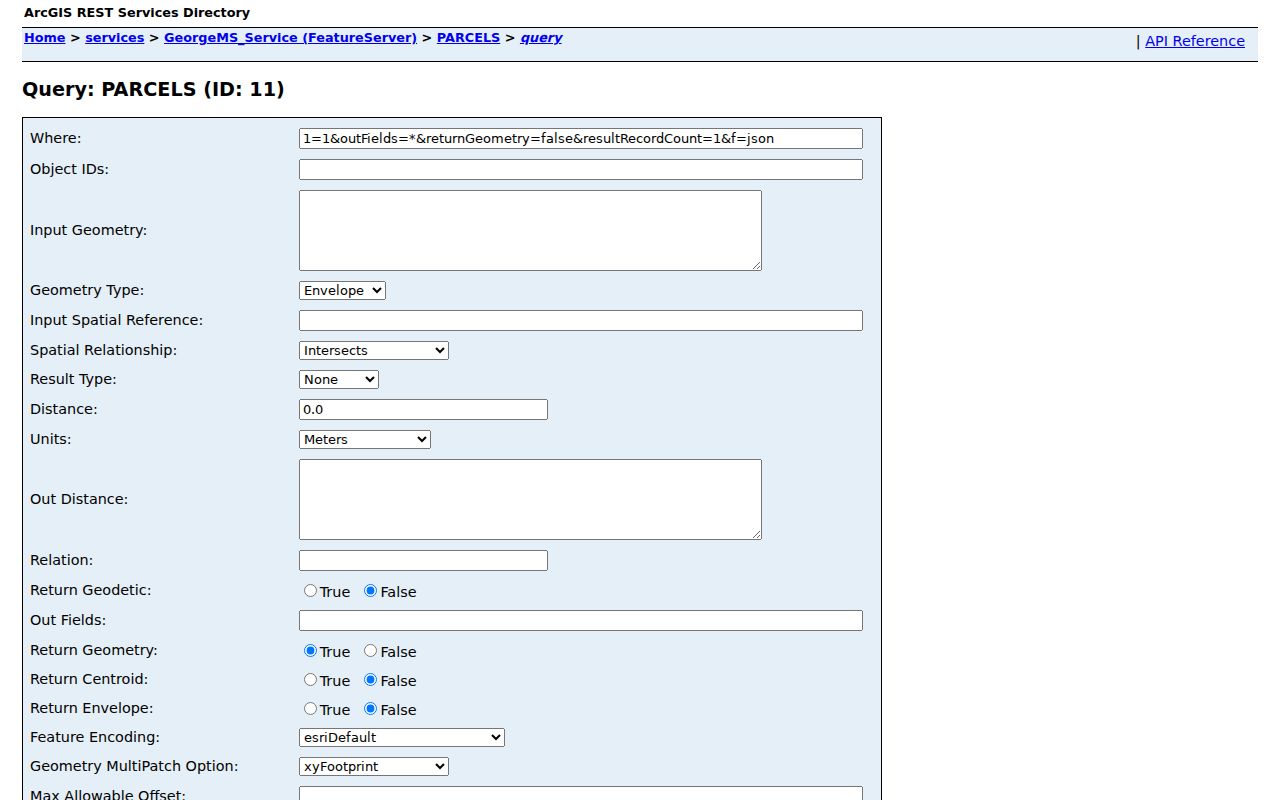
The sample shows field structure only. Repeat the query with the subject property's own key, and record the search date for later reference.
Where George County Property Ownership Appears
No single screen answers every ownership question. The assessor and GIS identify the roll name, while the Chancery record documents the transfer itself. Access differs too. Current property and map data run on public vendor tools, but detailed online land-record use requires registration and a subscription.
| Record source | Ownership clue | How current and how accessed |
|---|---|---|
| Delta appraisal roll | Owner name, mailing address, parcel and PPIN | Free discovery tool; vendor warns of courthouse lag |
| Chancery land index | Latest grantee, filing data, legal description and related instruments | Web subscription since May 2020; courthouse index controls |
| ArcGIS parcel layer | OWNERNAME, parcel keys, deed reference and situs | Public map data; hub labels effective year 2025 |
| Courthouse or written request | Official index check and existing nonexempt records | In person, phone, or request under state law |
The Chancery portal calls its web index unofficial. Online copies are final credit-card purchases carrying a 3.5 percent service fee and a $2 minimum. The courthouse route stays open. A person who cannot use the portal can inspect through the clerk and ask for an estimate before any copy work.
Confirm a George County Roll Name With the Latest Deed
Search the exact roll name as a grantee first. Narrow by parcel, legal description, or book and page. The Chancery result template can display instrument number, type, file date, consideration, from and to parties, related instruments, property details, and image access. Choose an actual conveyance. The newest filing attached to a name is not always a transfer. A deed of trust, release, or lien conveys nothing by itself.
If the web entry is incomplete, the courthouse index is the authority. Ask the clerk for the latest conveyance. That may be a tax deed, executor or administrator deed, heirship instrument, court order, or other conveyance tied to the parcel. This is where the method meets the proof.
Note: Capture both the deed's file date and the roll search date so a later reviewer can understand any mismatch.
Decode Trust, Estate, and LLC Owners in George County
A George County roll may name a trust, estate, company, trustee, or administrator rather than an individual. Search the exact text first. Then try reasonable variants reflected in the records. For an estate, probate and heirship instruments can explain a change that does not look like an ordinary sale. For a company, the Mississippi Secretary of State Business Search can confirm the entity's registered name and status.
Entity data answers a different question than the deed. A registered agent is not necessarily the beneficial owner, occupant, or person authorized to negotiate about the parcel; the recorded instrument and any controlling court or probate file remains the property evidence. Entity filings never replace the deed.
George County Fraud Alerts Watch Names, Not Title
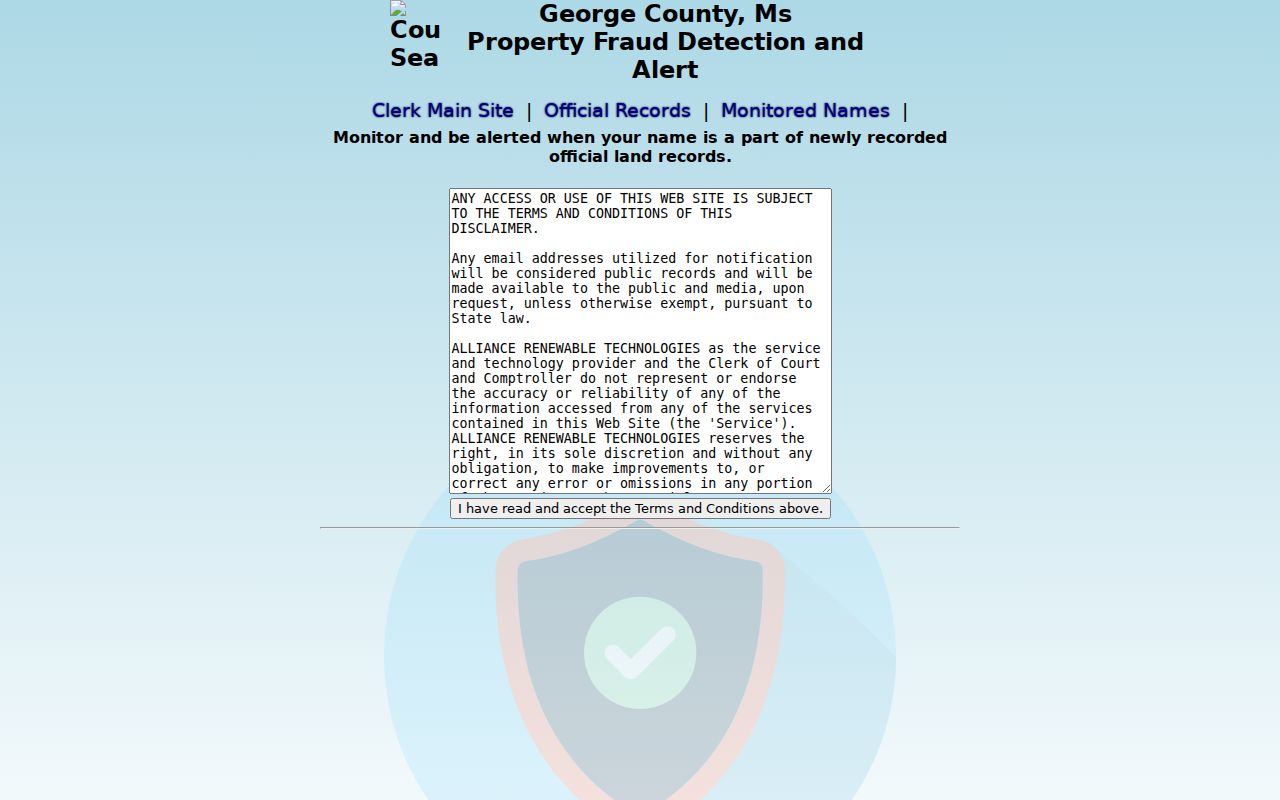
The Chancery Clerk's fraud-alert service watches newly indexed grantor and grantee names. It does not watch the land itself. Enrollment is simple. You confirm contact details and list the name you want monitored. One local tip matters: the service matches only the registered variation of a name. So file separate alerts for the full form, the middle-name form, and the middle-initial form.
The George County fraud-alert enrollment page shows the contact and monitored-name fields.
When something matches, the alert reports the indexed instrument. It does not decide who owns the property, block a filing, or substitute for title insurance and legal advice.
Match George County Owner Names Without Losing the Parcel
Name searches fail in predictable ways in George County. Delta displays a last-name, first-name pattern. The Chancery portal can search all parties, grantees, grantors, or matched names. Punctuation, middle initials, married names, trustee labels, estate wording, and company suffixes can all interfere. These can split one ownership trail into several results. Start with the exact assessment spelling. Keep the PPIN and legal description beside it, though. A surname-only query, where available, can surface variants. You then reject anything tied to other parcels.
The land portal's property criteria can narrow a broad party result. Options include Parcel ID, Parcel Num, PPIN, legal description, subdivision, block, lot, section, township, range, street, or number. That helps most with a rural George County tract whose owner held several properties. A name match alone is weak. A name, legal description, and recorded reference together are much stronger.
The recorder also exposes instrument type and date controls. Restricting a result to a deed category can filter the noise. It separates a true conveyance from deeds of trust, cancellations, releases, easements, construction liens, federal tax liens, and court notices. Still open the record. The label is only a search aid. The image and official index entry supply the details that identify the receiving party.
Choose the Right George County Custodian
The Tax Assessor/Collector maintains the appraisal and tax discovery trail. Its current office sits at 309 Summer Street in Lucedale, reachable at 601-947-7541, open weekdays from 8 a.m. to 5 p.m. That office can resolve a missing parcel result, the owner name on a property card, mailing and situs fields, PPIN, assessment year, homestead data, and the deed reference in its system. It cannot turn the assessment record into a title opinion.
The Chancery Clerk is the land-record custodian. The office at 355 Cox Street holds deeds, deeds of trust, plats, liens, tax-sale and redemption records, probate material, wills, guardianships, and Chancery cases. When the question is who owns the land after the newest recorded transfer, this office confirms the official index. The public web index helps locate the instrument, but the portal expressly yields to the courthouse index.
Written requests work best when they ask for existing records rather than an ownership conclusion. Include parcel identifiers, an exact address if one exists, the legal description, owner variants, likely instrument categories, and a useful date range. Say whether an index entry, electronic image, or certified copy is needed. Under state law, an office may charge actual search, review, duplication, and mailing costs, so request an estimate to avoid surprises.
Trace George County Ownership Through Unusual Transfers
Not every present owner arrived through a standard sale deed. Chancery vocabulary includes heirship deeds, executor and administrator deeds, and tax deeds. Foreclosure deeds and deeds reserving a life estate appear too. So do joint-tenancy instruments and mobile-home real-estate certifications. Probate files and court orders may explain authority or a contested interest. If the newest warranty deed seems too old, check these alternate routes. Do not assume the assessment roll is stale yet.
Read a tax deed or foreclosure deed alongside related redemption, release, court, or notice records. A life-estate deed may divide current interests in a way one owner-name field cannot express. Mineral and royalty instruments can separate subsurface rights from the surface estate. The public owner route should answer the practical identification question. It should also preserve any sign that the legal interest runs deeper.
A purchase or estate can be high-stakes. A boundary conflict can too. Collect the records rather than declaring the legal result. A Mississippi attorney or title professional can examine the complete chain, exceptions, and unrecorded risks. The county workflow still matters. It supplies the exact people, entities, dates, parcel keys, and instruments that review needs.
Document the George County Owner Finding
Write down the address exactly as entered. Add every alternate key you tried and the date of the live search. Include the owner spelling from Delta or ArcGIS. Note the PPIN, parcel ID, and any book/page shown. Save the GIS effective-year label too, since that shows whether the answer came from a current-roll discovery tool or from a newly checked record.
Cite the Chancery instrument that confirmed the owner. Save the instrument number, type, file date, and the from and to parties. Record the legal description, book/page, and image status as well. Say so if the newest filing is not a conveyance. Note the difference if the online index conflicts with the image or omits a field. The courthouse index controls.
Close with a one-line status. Say the roll and latest recorded grantee matched on the search date, or that they differed and needed clerk review. The records may also support no conclusion. That careful wording answers who owns a George County property without pretending a public portal settles title, occupancy, boundaries, or interests hidden behind an entity.
Limits on Asking Who Owns George County Property
An assessment name cannot settle occupancy. It will not resolve competing interests, fix an exact boundary, or surface every unrecorded claim. A deed image shows what was recorded, nothing more. Courts, probate files, easements, mineral reservations, and later corrective instruments can all change who the true owner of record is.
Check before relying. Use George County owner records for lawful property research, purchase due diligence, estate work, and boundary questions. Never use owner details to stalk, harass, threaten, or harm a person.
For a legal conclusion, take the parcel identifiers and recorded instruments to a Mississippi title professional or attorney. The public workflow has a narrower job. It identifies documents, spots conflicts, and frames a precise request to the custodian. Keep the search date with every saved result. A later filing can change the recorded trail. Recheck the official index before any closing, dispute, or decision that turns on the answer.
Ask George County for an Existing Owner Record
Portals sometimes leave ownership unclear. Go straight to the office holding the record instead. For appraisal and tax roll material, that means the George County Tax Assessor/Collector at 309 Summer Street. Request the parcel card and ask for the owner field. Include the PPIN, parcel ID, situs address, mailing lines, and assessment year. Also ask for the deed reference shown on the card. The office answers questions at 601-947-7541 during published hours, Monday through Friday, 8 a.m. to 5 p.m.
Deed records live with the George County Chancery Clerk. A request that lands well names the address, the PPIN or parcel number, and the legal description. Add the parties involved, the instrument type, and a date range. Ask about electronic copies if the office offers them. Get a fee estimate before any chargeable work begins. The Mississippi Public Records Act of 1983 governs the process. Nonexempt records are open to inspection and copying. A denial must cite the exemption claimed, and fees are limited to actual cost.
Neither office will draw an ownership conclusion or perform legal research for you. Request the documents and metadata they already keep. Then check the answers against the tax roll and the newest deed. This direct channel matters most when a filing is brand new, an online lookup returns no match, or a parcel's address keeps failing.